
AI Lead Generation Blueprint for 2026 Entrepreneurs
Watch Our Latest AI Videos on YouTube
AI Lead Generation, AI for Entrepreneurs, Small Business Leads 2026
AI Lead Generation: The Ultimate Blueprint for Entrepreneurs Who Want More Clients in 2026
If you’re still treating AI as a “nice-to-have,” you’re already behind. In 2026, AI lead generation is the backbone of serious client acquisition, and Bison Vazquez has turned it into a repeatable system any focused entrepreneur can deploy.

Why AI Lead Generation Is Non‑Negotiable in 2026
The numbers are blunt. LegalZoom reports that most entrepreneurs now consider AI fundamental to running a business, not a side experiment. AI adoption across small businesses keeps climbing, and the founders who embrace AI lead generation are pulling ahead while everyone else argues about algorithms on social media.
Bison Vazquez treats AI like a revenue employee: it researches prospects, qualifies them, follows up relentlessly, and feeds sales‑ready opportunities into a tight AI sales funnel. No ego, no excuses, no “I forgot to follow up.” Just disciplined lead gen automation that compounds daily.
How AI Is Transforming Lead Generation for Entrepreneurs
In 2026, AI isn’t just “helping” with marketing; it’s quietly running entire client acquisition pipelines. Autonomous AI agents can research, segment, and prioritize prospects. Tools like Cleanlist, Apollo.io, and Lessie AI enrich data, identify ideal buyers, and personalize outreach at a scale a human team simply cannot match at small business budgets.
For AI for entrepreneurs, the real leverage is this: you stop guessing. Your systems tell you which campaigns pull real small business leads 2026, which messages convert, and which prospects are ready to buy this week. Bison’s clients aren’t “hoping” for referrals; they’re operating predictable pipelines fueled by automated lead capture and AI‑driven follow‑up.
AI‑Powered Landing Pages That Convert Strangers Into Prospects
Most landing pages are lazy. Generic headlines, vague offers, and zero personalization. AI kills that laziness. With today’s tools, you can deploy AI‑powered landing pages that adapt headlines, copy, and offers based on visitor behavior, traffic source, and even industry signals in real time.
Connect your CRM (HubSpot, Salesforce, or Zoho) to enrichment platforms like Cleanlist or Clay. When a visitor opts in, AI enriches their data instantly—company size, role, tech stack—then adjusts the thank‑you page, upsell, or booking prompt accordingly. That’s not theory; that’s how Bison structures intent‑driven funnels that pull in higher‑value clients without increasing ad spend.

When AI tunes your pages and data, every new visitor becomes a sharper opportunity.
Chatbots That Capture and Qualify Leads 24/7
If your website still relies on a static contact form, you are leaking money. Modern AI chatbots—built with tools like Intercom, Drift, Lumyx, or 1mind—sit on your site, your landing pages, and even your WhatsApp or Facebook, handling automated lead capture around the clock.
Bison configures bots to do three things ruthlessly well: greet, qualify, and book. They ask smart questions, identify budget and urgency, answer common objections, and then either schedule a call or route the lead into your AI sales funnel for nurturing. No more “Sorry, we missed your message over the weekend.” The bot never sleeps, never forgets, and never gets overwhelmed.
For service businesses, pairing a chatbot with a booking agent like Lumyx is lethal. Prospects land on your page, get questions answered, and lock in an appointment in under three minutes—without you lifting a finger.
🔥 Follow us on Instagram @aiemployers for daily AI business strategies — Like and comment for more!
Automated Follow‑Up Sequences That Don’t Drop the Ball
Most entrepreneurs lose deals in the gap between “interested” and “ready.” Humans get busy. AI doesn’t. With email and SMS platforms like HubSpot, Marketo, Lemlist, or Apollo.io, you can build automated follow‑up sequences that adapt to behavior—opens, clicks, replies, and even call outcomes—without manual intervention.
Bison’s rule is simple: no lead goes cold without at least 7–12 high‑value touches. AI writes personalized messages, suggests subject lines (tools like Lavender help here), and adjusts cadence based on engagement. One prospect gets a case study, another sees a testimonial video, a third gets a direct “Are you still interested?” nudge. The system reacts in real time, so you’re always in the right inbox with the right message.
Lead Scoring With AI: Focus Only on Buyers Who Matter
Chasing every lead equally is amateur hour. AI‑driven lead scoring flips that. Platforms like HubSpot AI, Salesforce Einstein, Zoho, Infer, and 6sense analyze hundreds of signals—industry, role, engagement level, website behavior, email response, even intent data—to assign each contact a live score.
Bison sets clear thresholds: hot leads trigger immediate human outreach; warm leads stay in nurturing sequences; cold leads are tagged for retargeting only. This is where lead gen automation pays off. Your calendar fills with serious buyers, not “just curious” time‑wasters. AI becomes your bouncer, guarding your time and attention.
The Platforms and Tools That Actually Drive Results in 2026
You don’t need 30 tools. You need a tight, proven stack. Based on 2026 reviews and real‑world performance, here’s the short list Bison keeps coming back to for small business leads 2026:
- Data & enrichment: Cleanlist for high‑accuracy data; Clay for flexible workflows and enrichment at scale.
- Outbound engine: Apollo.io as an all‑in‑one outbound workhorse; AiSDR or Lessie AI for advanced, agentic outreach when you’re ready to scale harder.
- Chat & inbound capture: Drift, Intercom, Lumyx, or Upfirst to handle website and phone inquiries 24/7.
- CRM backbone: HubSpot, Salesforce, or Zoho with AI features switched on for scoring, routing, and forecasting.
The trend is clear: entrepreneurs are consolidating into a few reliable vendors instead of juggling dozens of half‑used tools. Follow that discipline. Depth beats novelty.
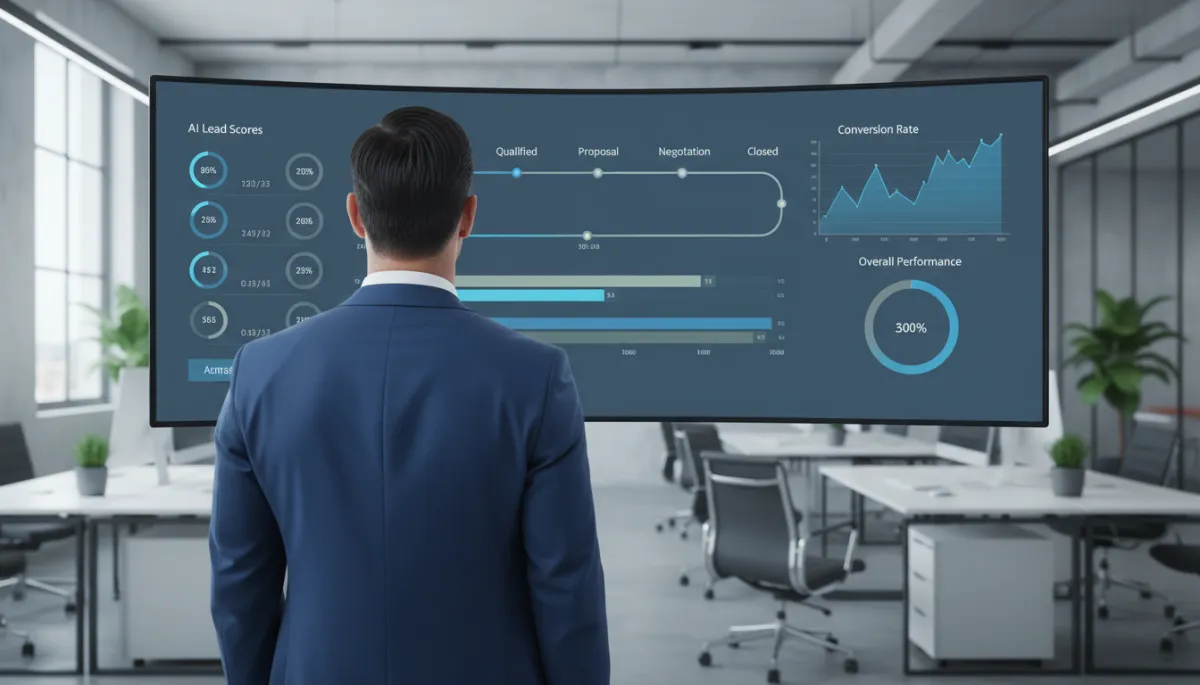
A disciplined, AI-powered stack turns scattered data into a focused sales pipeline.
Step‑by‑Step Blueprint to Implement AI Lead Gen Today
Bison Vazquez doesn’t play the “someday” game. Here’s the exact blueprint he uses and teaches to get AI working for your lead generation in weeks, not years.
- Lock in your offer and ideal client. AI won’t fix a vague offer. Define the problem you solve, the exact buyer you serve, and the outcome you deliver. Document it. Everything else plugs into this.
- Choose your CRM and core stack. Pick HubSpot, Salesforce, or Zoho as your central source of truth. Add Apollo.io or Clay for outbound, and Cleanlist for enrichment. Connect them. No more scattered spreadsheets.
- Build one AI‑powered landing page. Don’t build ten pages; build one that works. Use AI copy tools to generate multiple headline and offer variations. Set up dynamic sections that adjust for industry or traffic source. Install tracking from day one.
- Deploy a 24/7 chatbot. Add Intercom, Drift, or Lumyx to that page. Script a direct conversation: who are you, what do you need, what’s your timeline, what’s your budget, and what’s the next step? Test it yourself until it feels sharp, not robotic.
- Wire in AI lead scoring. Turn on AI scoring in your CRM. Feed it your past deals, wins, and losses. Let it learn who becomes a client and who ghosts you. Set clear rules: scores above X go straight to your calendar; scores below stay in nurture.
- Launch automated follow‑up sequences. Map a 30–60 day journey for new leads: value emails, short videos, case studies, and direct asks. Use AI to draft, personalize, and continuously optimize based on open and reply data. You write the strategy; AI executes the repetition.
- Review the numbers weekly, not yearly. Every week, Bison looks at one thing: which channels produced the highest‑scoring leads and the fastest closes. Cut what’s not working, double down on what is. AI gives you the data, but you still make the decisions.
If you follow this blueprint with discipline, you stop “trying AI” and start running a serious, AI‑driven client acquisition system.
The Training Bison Vazquez Uses to Turn AI Into a Lead Machine
You can guess your way through this, or you can plug into the same playbook Bison relies on. If you want AI doing the heavy lifting—researching prospects, following up, booking calls, and feeding your pipeline—then stop piecing it together from random YouTube shorts.
Bison recommends the exact step‑by‑step training he uses himself: AI Secrets Challenge . It’s built for entrepreneurs who want AI working for their lead generation, not sitting idle in a subscription list. If you’re serious about turning this blueprint into a live system, start there and execute relentlessly.
Final Word: In 2026, AI Is Your Hardest‑Working Team Member
The entrepreneurs winning in 2026 aren’t the loudest. They’re the ones who quietly built AI‑driven systems that collect, qualify, and convert leads every single day. They respect data, automate repetition, and reserve their energy for high‑stakes conversations and strategic moves only they can make.
You can keep chasing hacks, or you can do what Bison Vazquez does: treat AI lead generation as a core business asset, build the stack, wire the funnel, and let the machine run. The clients are out there. The question is simple—will they find you through a disciplined AI system, or will they end up on your competitor’s calendar instead?
