
AI Lead Generation Blueprint for Entrepreneurs
🎬 Watch Our Latest AI Videos on YouTube
Get the latest AI strategies for your business — subscribe and never miss an update!
AI, Lead Generation, Small Business Growth
The Ultimate AI Lead Generation Blueprint for Small Business Entrepreneurs
If you are still relying on manual prospecting, random referrals, and sporadic campaigns, you are leaving serious money on the table. In this blueprint, Bison Vazquez — the authority on AI for business — shows you exactly how to build an AI-driven system that attracts, nurtures, and closes high-quality small business leads on autopilot.
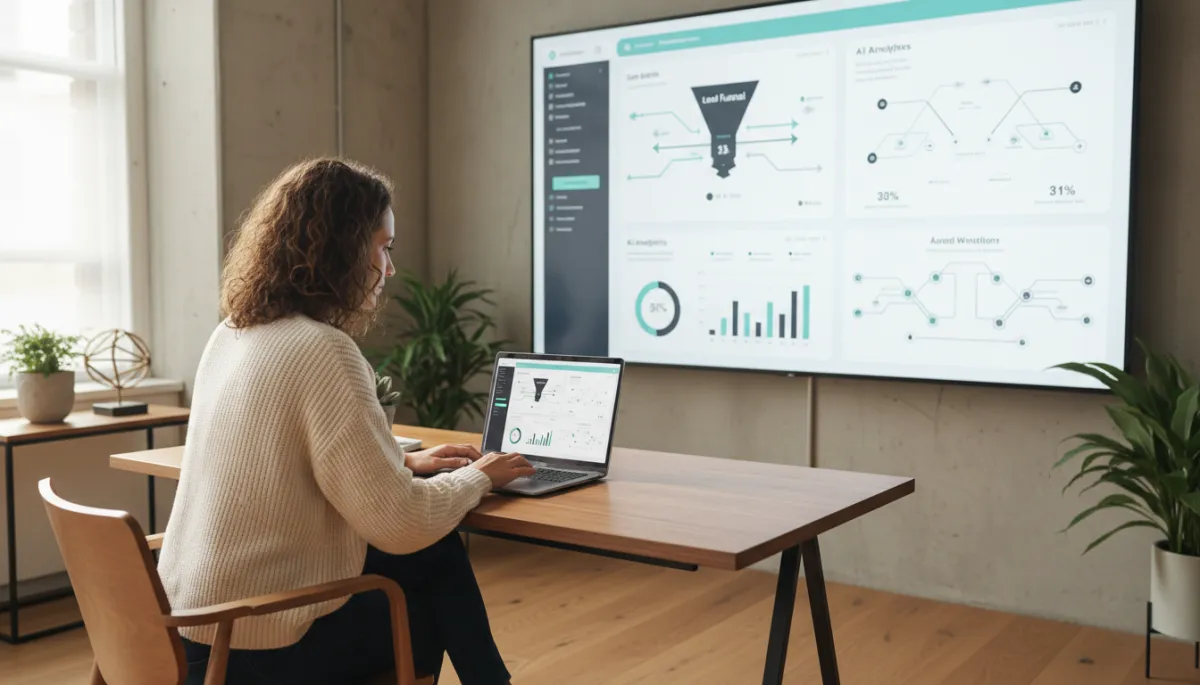
Why AI Lead Generation Is Now Non‑Negotiable
AI lead generation is not a shiny toy; it is a competitive weapon. While most small businesses are still guessing who to target and when to follow up, AI quietly analyzes behavior, predicts intent, and prioritizes the prospects most likely to buy from you this month.
Industry data is blunt: by 2026, leading tools like Apollo.io, Clay, and Amplemarket are combining massive contact databases with AI personalization and intent data to surface ready-to-talk prospects in minutes, not months (ortemtech.com; aitechstack.io). If you choose to ignore this shift, you are choosing slower growth and higher acquisition costs — while your competitors quietly compound their advantage.
Step 1: Define Exactly What a High‑Value Lead Looks Like
Before you touch any software, you must decide what “gold” looks like for your business. AI cannot save a fuzzy strategy. Start by defining your ideal small business leads with ruthless clarity:
- Industry and niche (for example, home services, local restaurants, B2B consultants)
- Company size (revenue range, number of employees, location)
- Buying trigger events (new location, funding, new product launch, hiring spree)
- Problems they are actively trying to solve right now
Document this. Your AI stack — from Apollo.io’s intent filters to Clay’s data enrichment — will use this profile to hunt down prospects that actually match your business, not just random email addresses.
Step 2: Build an Automated Lead Capture Engine
Manual forms and “contact us” pages are dead weight. Your website, ads, and social channels must run automated lead capture 24/7. Here is how serious entrepreneurs architect that system:
- AI chatbots that greet visitors, ask qualifying questions, and book calls automatically. Advanced bots use natural language to understand intent and collect contact details without friction.
- Interactive content — calculators, quizzes, and assessments that diagnose a problem and trade the results for an email address. These outperform static lead magnets because they feel like a personalized consultation.
- Smart forms that shorten or expand based on who the visitor is and what you already know about them, cutting drop‑off and capturing richer data.
Forward‑thinking businesses are even using tools like Upfirst to capture inbound phone leads around the clock — a gap most traditional systems ignore (upfirst.ai). When you combine these automated touchpoints, your funnel is always open, always learning, and always feeding your CRM with fresh opportunities.

Smart chatbots and dynamic forms quietly convert anonymous visitors into qualified leads.
Step 3: Deploy AI CRM Tools as Your Central Command Center
Collecting small business leads is useless if they sit in a spreadsheet. This is where AI CRM tools become non‑negotiable. Modern platforms like HubSpot (with Breeze AI), Freshsales (Freddy AI), Zoho (Zia), and Salesforce’s Agentforce are not just databases — they are decision engines (aistackguides.com; techradar.com; findbestcrm.com).
Here is what a serious, AI‑first CRM setup gives you:
- Predictive lead scoring that ranks every contact based on behavior, fit, and engagement — so your team calls the hottest prospects first.
- Next‑best‑action suggestions that tell you who to email, who to call, and what to say, based on historical conversions.
- Automatic data enrichment from tools like Clay or Apollo.io, filling in missing firmographic details without manual research.
📸 Follow Us on Instagram for Daily AI Tips!
@aiemployers — like and comment for more content like this!
Step 4: Lead Nurturing Automation That Works While You Sleep
Most prospects are not ready to buy the day they discover you. That is where lead nurturing automation earns its keep. Instead of random blasts, AI builds personalized journeys based on behavior, interests, and timeline.
Modern CRMs and email platforms now use AI to:
- Draft emails in your voice that address the exact objection or question a lead just expressed.
- Trigger sequences when a lead visits pricing pages, downloads a guide, or attends a webinar — with messaging tailored to that action.
- Adjust send times, frequency, and content based on which emails the lead actually opens and clicks.
“By 2026, AI and machine learning are expected to personalize and automate lead generation at a level that dramatically outperforms manual methods.”
— Forbes Agency Council, Future of Lead Generation (2026 trend forecast)
This is the real power move: you use AI to stay top‑of‑mind, educate, and build trust at scale, so when the timing is right, your sales call feels like the obvious next step — not a cold interruption.
Step 5: Convert Leads With AI — From Interest to Revenue
The goal is not more leads; the goal is more revenue. To convert leads with AI, you must bring intelligence all the way into your sales conversations, not just your marketing funnel.
- AI‑generated call prep: Tools like Freshsales’ Freddy AI and Salesforce’s Agentforce summarize every interaction, surface key pain points, and propose talking points before you even dial.
- Real‑time objection handling: Generative AI can suggest responses, case studies, or offers mid‑conversation, based on what has closed similar deals in the past.
- Post‑call follow‑ups: AI drafts recap emails, proposals, and next‑step reminders instantly, while the conversation is still fresh.

AI‑driven insights turn every sales call into a focused, high‑probability conversation.
If you want a shortcut, solutions like Bebop’s “Ready‑to‑Sell Leads” even deliver quadruple‑vetted, high‑intent leads plus a custom playbook of angles and objections built by advanced language models (prnewswire.com). That is AI compressing years of sales learning into a single campaign.
Step 6: Choose the Right Tools for Your Size and Sales Motion
You do not need every tool on the market; you need the right stack for your reality. Use this simplified playbook:
- Solo founders and micro‑teams: Start with HubSpot’s free CRM plus Breeze AI or HelloGrowthCRM for low‑cost AI scoring and automation. Add an Instantly or Smartlead account if you rely heavily on cold email.
- Local service businesses: Combine an AI chatbot on your site, Upfirst for inbound phone leads, and Freshsales for pipeline management and follow‑up automation.
- B2B agencies and consultancies: Use Apollo.io or Amplemarket for data + outbound, Clay for enrichment, and Zoho or Salesforce for deep CRM workflows.
Step 7: Track the Only Numbers That Matter
The point of this entire AI lead generation blueprint is not dashboards for their own sake; it is predictable growth. Measure what matters and let AI surface the patterns:
- Cost per qualified lead from each channel and campaign
- Conversion rate from lead to opportunity, and opportunity to closed deal
- Average sales cycle length and how it changes as you add automation
AI‑powered CRMs like Creatio and Salesforce already analyze historical transactions to forecast revenue and flag deals likely to stall (techradar.com). Use those insights to double down on what works and kill what does not — fast.
Your Next Move: Turn This Blueprint Into a Live System
You now have the full architecture: AI lead generation to find the right people, automated lead capture to bring them into your world, AI CRM tools to organize and prioritize them, lead nurturing automation to build trust at scale, and concrete tactics to convert leads with AI in your sales process.
Most entrepreneurs will read this, nod, and go back to chasing random leads. That is not you. If you are serious about growth, block time this week to:
- Define your ideal small business leads in writing.
- Choose one AI CRM and one outbound or enrichment tool — and commit.
- Launch a single, tightly scoped automated funnel from capture to close.
The small businesses that win over the next three years will not be the ones with the biggest teams. They will be the ones that treated AI like a core capability, not a side project. Build your system once, refine it relentlessly, and let it compound for you every single day.
Connect With Us on Facebook!
