AI Voice Booking Is Changing Everything — Here's What Local Businesses Need to Know
AI Voice Booking, Local Business AI, AI Appointment Automation
AI Voice Booking Is Changing Everything — Here's What Local Businesses Need to Know
Welcome back, AI Employers! Here's what's reshaping the game this week... AI voice booking is quietly becoming the most profitable “employee” in local businesses everywhere. If you run a service business or create content for them, this is your moment to put AI voice booking, AI appointment automation, and local business AI to work so you never miss another call, client, or opportunity again.

This Week's Big Idea: The Phone Is Still King
In a world obsessed with DMs, funnels, and fancy chat widgets, the humble phone call is still where the real money changes hands. For local service businesses—towing companies, salons, restaurants, contractors, dental offices, med spas, home services—the phone is the moment of truth. Someone is calling because they are ready to solve a problem right now, not “sometime later.”
Think about it. When your car breaks down on the highway, you don’t fill out a contact form. You call. When a parent is trying to get a same-day dental appointment for a kid in pain, they don’t want to wait for an email reply. They call. When a bride needs to lock in a stylist for her wedding day, she calls and is ready to put down a card on the spot. That is why AI voice booking is such a powerful shift—it meets customers exactly where they already are: on the phone.
Here’s the problem most owners don’t like to look at: those calls are being missed. Industry studies and call tracking data show that local businesses lose 60–80% of after-hours calls. During the day, it’s not much better—calls roll to voicemail while staff are with customers, driving, or simply overwhelmed. And let’s be honest... how often do you return a random voicemail from an unknown number? Exactly.
Every missed call is not just “a lead.” It’s a broken-down car that goes to a different tow company. It’s a $200 color treatment that books with another salon. It’s a $3,000 roofing job that never even hits your pipeline. This is why local business AI on the phone is no longer a nice-to-have—it’s becoming survival strategy. The businesses that win the next five years will be the ones that answer every call, every time, even when no human is free to pick up.
Why AI Voice Booking Is the Upgrade You Didn't Know You Needed
Let’s get practical. AI voice booking is simply this: an AI phone agent that answers your calls, talks like a real person, asks the right questions, books the appointment, and follows up—24/7—without any human involvement. It’s like hiring a full-time receptionist, night-shift dispatcher, and follow-up specialist in one... for a fraction of the cost.
Here’s how it works in plain language. When a call comes in, your AI phone agent picks up in a couple of rings with a friendly, branded greeting. It can recognize what the caller needs—towing, a quote, a reschedule, a new appointment—and guide the conversation. Under the hood, it’s connected to your calendar or booking system, so when the caller is ready, the AI can see real-time availability and lock in a time on the spot. That’s AI appointment automation doing the heavy lifting for you, quietly and consistently.
Picture a local towing company. It’s 1:30 a.m. A driver is already on a job. Another call comes in from someone stranded on the freeway. Instead of going to voicemail—or worse, ringing endlessly—your AI voice booking agent answers. It gathers the location, vehicle type, and issue, gives a clear ETA based on your service area rules, and books the job. By the time the driver finishes the first tow, the second job is already on the schedule, text-confirmed, and mapped out. No missed revenue. No angry caller. No 24/7 call center bill eating your margins.
Or take a hair salon. Your stylist is with a client, hands full of foils and color. Three calls come in back-to-back. Instead of interrupting the appointment or letting calls die in voicemail, your AI phone agent answers each one. It can ask what service they want, how long their hair is, and whether they prefer mornings, afternoons, or evenings. Then it offers real slots that fit, books them, and sends confirmations. The stylist finishes the current client in peace and looks down to see tomorrow’s calendar magically fuller—no frantic callbacks required.
Now think about a dental office. Staff are constantly juggling insurance questions, new patient intake, and chairside support. AI voice booking can triage calls—urgent pain, new patient, routine cleaning—so humans focus where empathy is needed most. For a cleaning, the AI phone agent collects basic info, checks availability, books the appointment, and sends reminders. For urgent cases, it can follow your rules to prioritize same-day openings and flag the team. You get the best of both worlds—human care where it matters, automated booking for everything else.
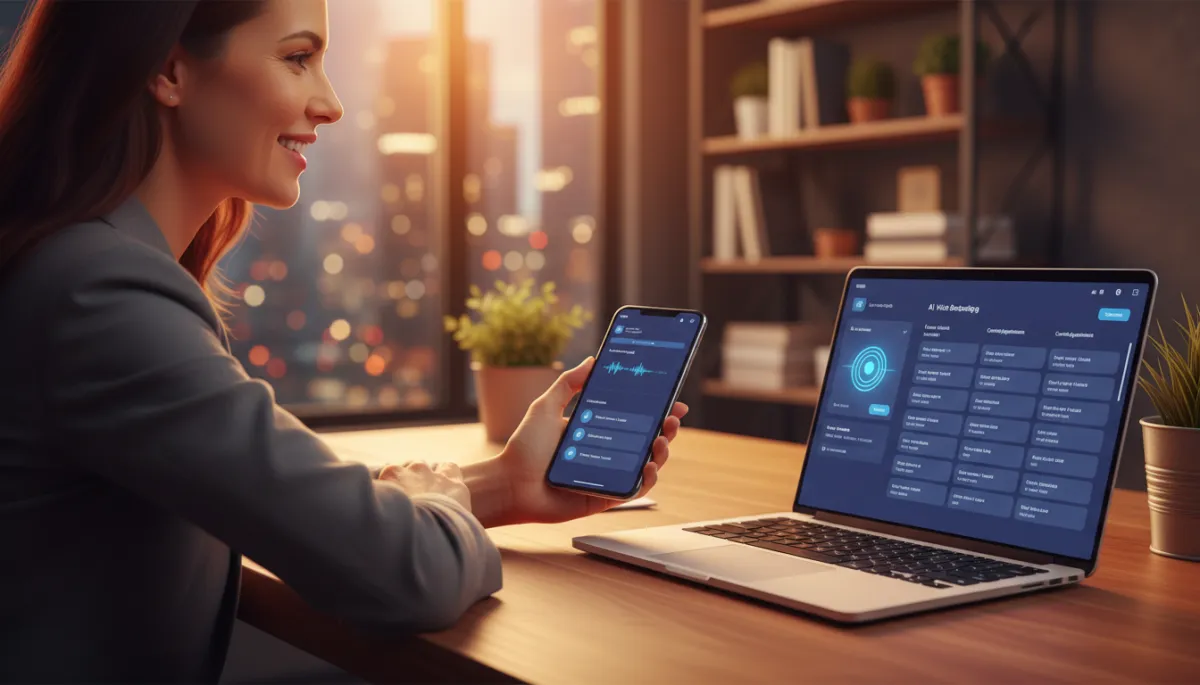
When AI handles booking, owners finally reclaim evenings, weekends, and mental bandwidth.
The magic is in the follow-up too. Modern AI voice booking systems don’t just answer; they remember. If someone calls, doesn’t book, but sounds interested, your AI can send a follow-up text, offer alternative times, or check back later. That’s automated booking for small businesses working in the background, turning “almosts” into revenue while you sleep.
The Numbers Don't Lie
• 62% of businesses already use some form of automated scheduling—up from 38% just a few years ago, and climbing fast (AdAI, 2026).
• Automated scheduling saves professionals an average of 8 hours per week—that’s a full workday back in your pocket every single week (AdAI, 2026).
• AI scheduling cuts admin costs by around 40% and slashes repetitive errors that lead to costly rescheduling (Worldmetrics, 2026).
• Smart reminders and rebooking flows reduce no-shows by up to 29–38%, and in some healthcare cases, as high as 50% (AdAI, SchedulingKit, 2026).
• In real-world service businesses, AI phone agents are capturing 60–80% of qualified inbound bookings that would otherwise be lost after-hours or during peak times (industry field-service benchmarks, 2026).
When you add those numbers up, AI appointment automation isn’t just a cool tool—it’s a revenue recovery engine. For many local businesses, plugging the “leak” of missed calls and no-shows is worth more than any new marketing campaign. You don’t need more leads until you stop leaking the ones you already have.
Who's This Built For?
For Local Business Owners
If you own or manage a local service business, AI voice booking is built for you—especially if your day feels like nonstop whack-a-mole. You’re serving customers, training staff, chasing invoices, and somewhere in there, the phone keeps ringing. You know you’re missing money, but you can’t be in two places at once. This is where a reliable AI phone agent steps in as your first true “AI employee.”
You don’t have to become a tech expert. You don’t have to rebuild your website. You simply decide what types of calls you want automated—new bookings, basic questions, after-hours calls—and define the rules: what services you offer, when you’re available, how far you’ll drive, which cases are urgent. Once that’s set, your AI voice booking system follows the playbook every time, without getting tired, distracted, or frustrated.
For Content Creators and Marketers
If you’re a content creator, agency owner, or marketing strategist serving local businesses, AI appointment automation is a goldmine for you as well. Why? Because it lets you move from “I’ll get you more leads” to “I’ll help you capture and convert more of the leads you already have—24/7.” That’s a different level of value... and a different level of pricing power.

Creators who pair marketing with AI booking become indispensable growth partners, not just “content people.”
Imagine this: you run ads, create short-form content, or manage social for a towing company, salon, or med spa. Instead of just reporting clicks and views, you can show them: “Here’s how many calls came in, here’s how many your AI phone agent answered, and here’s how many appointments were booked automatically.” You become the person who not only drives demand but also installs the system that turns that demand into dollars. That’s how you move into the role of trusted advisor—and justify retainers, performance fees, or revenue shares.
📸 Follow Us on Instagram
Daily AI tips, behind-the-scenes, and strategies for AI Employers
@aiemployers — Follow NowYour Action Step This Week
1. Audit Your Missed-Call Reality
Before you install anything, get honest about the problem. For the next seven days, track every missed call, voicemail, and after-hours ring. How many came in when no one answered on the first few rings? How many voicemails did you actually return? If you have call logs from your phone provider, pull them. Even a rough count will wake you up fast—especially when you multiply those missed calls by your average ticket value. This simple audit often reveals thousands of dollars slipping through your fingers every month.
2. Map One Simple Booking Flow
Next, choose one high-value scenario where AI voice booking can help immediately. Maybe it’s “new towing job,” “new salon client,” “new dental cleaning,” or “request a roofing estimate.” Write out, in bullet points, the questions you normally ask on the phone:
- What’s your name and best phone number?
- What service do you need?
- When are you hoping to come in / get help?
- Any special details we should know?
That script becomes the backbone of your AI phone agent. You’re not trying to automate every edge case on day one. You’re building a clean, predictable flow that an AI can run perfectly—again and again—while you and your team focus on the human parts of the business.
3. Put Your First AI Employee to Work
Once you’ve seen the size of the leak and mapped a simple flow, it’s time to deploy. Start small but decisive: route after-hours calls to your AI voice booking system first. Let it answer, qualify, and book appointments while you’re off the clock. Then, as your confidence grows, you can add overflow calls during the day, specific campaigns, or even VIP lines for certain services. The goal this week isn’t perfection—it’s getting your first AI employee on the field, learning, and generating wins.
Ready to put your first AI employee to work? Thousands of businesses are already using tools like these to reclaim their time—and their revenue. You don’t have to guess your way through setup. You can follow a proven, step-by-step playbook that shows you exactly how to plug AI voice booking, AI appointment automation, and automated booking for small businesses into your world, even if you’re not “techy.”
Editor's Note / Until Next Week
Here’s the bottom line: AI voice booking isn’t about replacing people—it’s about rescuing opportunities that were already slipping away. For local businesses, it means no more silent phones after 5 p.m. For content creators, it’s the missing piece that turns views and clicks into booked appointments and real revenue. And for you, as an AI Employer, it’s one of the simplest, highest-leverage “first hires” you can make in the AI era.
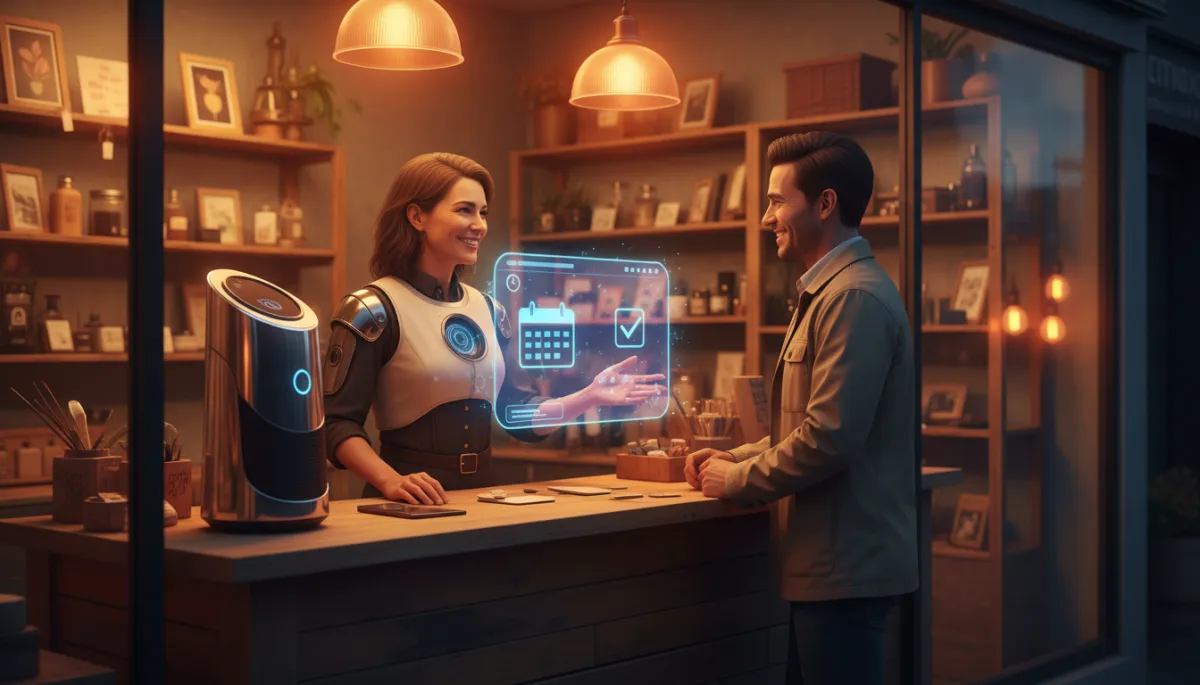
The future of local business looks human plus AI—always-on support with a personal touch.
As you wrap up this week, ask yourself: “What would change if my business never missed another serious call?” Then, don’t keep this to yourself. Forward this newsletter to one business owner friend or client who needs to hear it—especially the one who’s always “too busy” and constantly chasing the phone. That’s exactly who AI voice booking can help most.
Until next week, keep putting AI to work for you—not the other way around.
📘 Connect With Us on Facebook
Stay in the loop with our community, live sessions, and AI tools updates.
