AI Voice Tech Revolutionizing Small Biz Service
🎬 Watch Our Latest AI Videos on YouTube
Get the latest AI strategies for your business — subscribe and never miss an update!
AI Voice Technology, Small Business Customer Service, Automation
How AI Voice Technology Is Revolutionizing Customer Service for Small Businesses
If you run a small business in 2026 and you are not actively deploying AI voice technology in your customer service, you are already behind. The gap between businesses that adopt voice AI for business and those that do not is widening every quarter—in response times, in customer satisfaction, and ultimately in revenue.

From Ringing Phones to Intelligent Conversations
Traditional phone lines and basic IVR menus were built for a different era. Customers today expect immediate, personalized answers—whether they call at 11 a.m. or 11 p.m. AI voice technology finally gives small business customer service the muscle that used to belong only to enterprise call centers with massive budgets.
Modern AI phone systems combine automatic speech recognition, large language models, and neural text-to-speech into a single, ultra-fast pipeline. Leading vendors are now delivering sub‑600 millisecond response times, which means your caller speaks, and the AI replies almost instantly—no robotic pauses, no awkward delays. According to recent industry data, unified voice-in/voice-out models have also cut inference costs by roughly 35% year-over-year, making enterprise-grade performance accessible to local shops, solo founders, and lean teams.
What AI Voice Technology Actually Does for Your Small Business
Strip away the jargon and here is what AI voice technology delivers for small business customer service right now:
- 24/7 intelligent call handling: AI voice assistants pick up every call, every time—no voicemail black hole, no missed opportunities, no lost leads while you are on another job or away from the front desk.
- Natural, human‑sounding conversations: Neural speech synthesis has reached human-parity in blind tests. Callers cannot reliably tell they are speaking to AI, as long as you configure the system with a clear, friendly voice and well‑designed flows.
- Personalized responses at scale: Integrated with your CRM or booking system, voice AI for business can greet returning customers by name, reference past orders, and offer relevant options without a human lifting a finger.
- Multilingual service: Advanced models handle multiple languages and accents, allowing you to serve a broader customer base without hiring a multilingual team.
This is not about replacing your staff with robots. It is about offloading repetitive, low‑value conversations—hours, directions, appointment confirmations, order status checks—so your people can focus on high‑value interactions that actually grow the business.
AI Phone Systems: Your New Front Desk, Receptionist, and Triage Team
Think of modern AI phone systems as a full-time, never‑tired, never‑sick front desk team that costs a fraction of a single full‑time hire. When a call comes in, the system can:
- Answer with a branded greeting and route based on intent, not just “Press 1, Press 2” menus.
- Handle routine FAQs—hours, pricing ranges, service areas, policies—through automated customer service that still feels conversational and human.
- Book, reschedule, or cancel appointments directly into your calendar system, sending confirmations by SMS or email.
- Capture leads after-hours by collecting names, call reasons, and contact details, then pushing them straight into your CRM for follow‑up.
Gartner and other analysts have been clear: by 2026, AI-driven customer service—voice and chat combined—will handle the majority of routine customer interactions. Small businesses that adopt early will win more business simply because they respond faster and more consistently than their competitors.
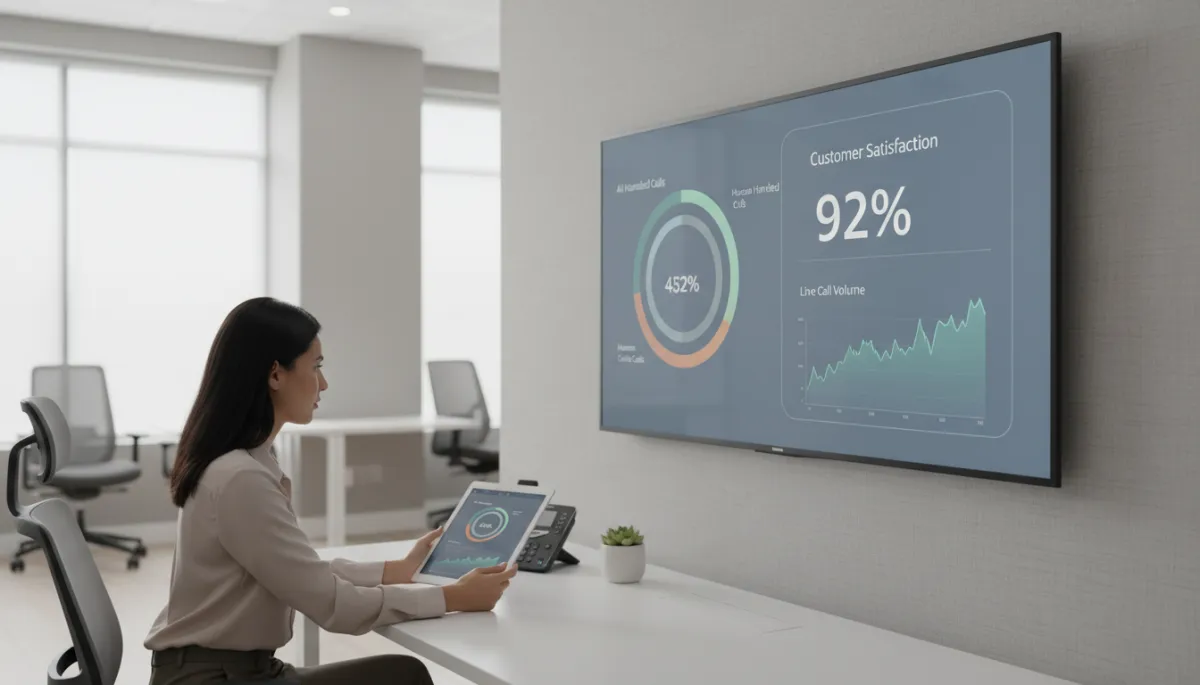
Real-time analytics from AI phone systems expose call volume, response speed, and satisfaction trends.
AI Voice Assistants: Beyond “Press 1 for Sales”
The old IVR trees were dumb. AI voice assistants are not. They listen, interpret intent, and respond dynamically. A caller can say, “I need to change my appointment from tomorrow to Friday afternoon,” and the assistant can understand the request, check availability, and complete the change without forcing the customer through a rigid menu maze.
Advanced systems are also starting to detect sentiment. If a caller sounds frustrated or anxious, the assistant can slow down, use more reassuring language, or escalate to a human faster. Combined with emotion-aware design, this makes automated customer service not just efficient, but genuinely empathetic at scale.
📸 Follow Us on Instagram for Daily AI Tips!
@aiemployers — like and comment for more content like this!
Concrete Use Cases: How Real Small Businesses Are Winning with Voice AI
Let us get specific. Here is how forward‑thinking owners are using voice AI for business right now:
- Local service contractors: Plumbers, towing companies, HVAC techs, and electricians deploy AI phone systems to answer every emergency call, triage issues, and dispatch or schedule without relying on a human dispatcher at 2 a.m.
- Health and wellness clinics: AI voice assistants manage appointment bookings, reminders, cancellations, and waitlists, reducing no‑shows and freeing reception staff from endless scheduling calls.
- Retail and e‑commerce: Automated customer service lines handle order tracking, return policies, and inventory questions, then hand off to a human only when the issue is complex or high‑value.
- Professional services: Law firms, accounting practices, and consultants use AI to pre‑qualify leads, gather intake information, and route high‑value prospects to the right expert.
In each of these scenarios, AI voice technology is not a gimmick; it is a revenue engine. Faster response times, fewer dropped calls, and cleaner handoffs translate directly into more booked jobs, higher client retention, and stronger reviews.

When AI handles calls and bookings, staff can focus on high-touch, in-person service.
Cost, ROI, and What “Good” Looks Like in 2026
The economics are brutally clear. Open-weight text‑to‑speech models and unified pipelines have slashed the cost of high‑quality voice AI. Some providers now charge pennies per minute of AI conversation. Compare that to the fully loaded hourly cost of a human agent, and the ROI speaks for itself—especially when you factor in 24/7 coverage and zero downtime.
For most small businesses, a strong implementation of automated customer service via AI voice should deliver:
- 50–80% reduction in routine call load on human staff.
- 30–60% faster average response time for new and existing customers.
- Noticeable lift in customer satisfaction scores and online reviews due to always‑available, consistent service.
Implementation Blueprint: How to Deploy Voice AI for Your Business
You do not need a technical background to win with AI voice assistants. You need a clear plan. Here is a simple, authoritative blueprint:
- Map your top 5 call intents. Why are people calling you most often? Bookings, pricing, order status, emergencies, directions—list them and rank by volume.
- Choose an AI phone system that integrates with your tools. Prioritize platforms that plug into your CRM, calendar, or ticketing system so the assistant can take real action, not just talk.
- Write strong, branded scripts. Define your greeting, tone, and escalation rules. Decide exactly when the AI should hand off to a human and how that handoff should sound.
- Start with one or two high‑impact flows. For example, after‑hours emergency calls and appointment scheduling. Nail those before expanding.
- Monitor and iterate weekly. Review call transcripts, identify friction points, and refine responses. The beauty of AI is that you can improve the experience continuously without retraining staff.
Security, Trust, and Doing AI the Right Way
As AI voice technology becomes more powerful, you cannot ignore security and ethics. Voice cloning is now possible from just a few seconds of audio, and regulators are paying attention. Choose vendors that:
- Support strong authentication, such as voice biometrics or multi‑factor verification, for sensitive actions like payments or account changes.
- Offer clear controls over data retention, encryption, and access to call recordings and transcripts.
- Allow you to disclose AI usage transparently in your scripts and privacy policy, building trust instead of trying to “trick” callers.
Done right, automated customer service through AI voice becomes a brand asset: fast, reliable, and respectful of your customers’ time and data.
The Bottom Line: Small Businesses That Act Now Will Dominate
2026 is a pivot point. Voice AI is no longer a “nice to have experiment” reserved for tech giants. It is a practical, proven tool that can transform how your phones are answered, how your customers are treated, and how efficiently your team operates. The winners will be the owners who move first, learn fast, and treat AI voice technology as a core part of their customer experience—not an add‑on.
If you are serious about scaling your small business customer service without bloating your payroll, you cannot afford to ignore AI phone systems and AI voice assistants any longer. Start with one high‑impact use case, implement ruthlessly, measure relentlessly, and expand from there. That is how you turn every ringing phone into a competitive advantage.
Connect With Us on Facebook!
