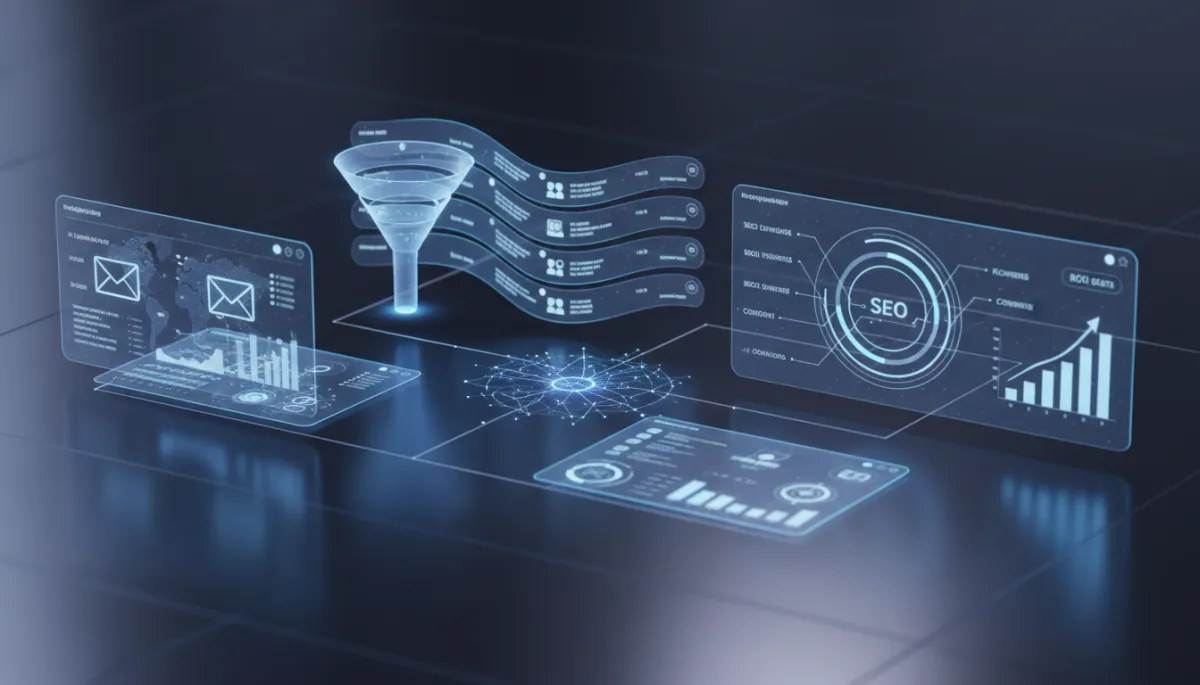
Top AI Marketing Tools for Entrepreneurs 2026
Marketing, AI Marketing Tools 2026, Small Business Growth
The Top AI Marketing Tools Every Entrepreneur Needs to Grow Their Business in 2026
Discover the essential AI marketing tools 2026 entrepreneurs are using to outspend, outsmart, and outperform their competition—without bloating their teams or burning out.

If you are still “dabbling” with AI in your marketing, you are already behind. In 2026, AI is not a shiny add-on—it is the operating system of serious small business growth. The entrepreneurs who master AI marketing tools now will quietly dominate their markets over the next 12–24 months.
Across industries, 87–91% of marketing teams now use generative AI, and 95% plan to increase investment further, according to recent 2026 surveys from Jasper and DigitalApplied. AI is no longer optional experimentation; it is the backbone of efficient, profitable customer acquisition. Entrepreneurs who treat it that way are seeing 2–3× better returns on their marketing spend while working fewer hours on execution.
Why AI Marketing Is Non‑Negotiable in 2026
CMOs are already allocating an average of 15.3% of their marketing budgets specifically to AI, with the most prepared organizations investing over 21%, according to Gartner’s 2026 CMO Spend Survey. That is not vanity spend—it is survival spend. AI-powered content, personalization, and paid media optimization are now responsible for a disproportionate share of growth in most modern marketing organizations.
For small business owners, this matters even more. You do not have the luxury of a 10‑person marketing department. You need leverage. AI for small business marketing gives you that leverage by turning one determined entrepreneur into the equivalent of a small, always-on marketing team—without the payroll, the meetings, or the burnout. Tools like ChatGPT, Claude for Small Business, and Jasper can draft campaigns, write landing pages, and even map out funnels in minutes instead of weeks.
Agentic AI—the automation layer that not only suggests actions but actually executes multi-step tasks—is accelerating this shift. Platforms like Gradial have helped enterprises like T‑Mobile cut campaign execution time by 80–90%. That same “autopilot” mindset is trickling down into accessible AI marketing tools 2026 entrepreneurs can adopt today through workflow platforms like Zapier, Dewx, and integrated suites such as HubSpot AI and Solara AI.
AI for Email Marketing: Turn Every Send into a Profit Engine
Email still delivers some of the highest ROI in digital marketing, and AI email marketing is multiplying that advantage. Tools like Mailchimp AI, Klaviyo, ActiveCampaign AI, and HubSpot’s AI‑driven workflows are transforming email from a blunt instrument into a precision sales channel for entrepreneurs who know how to use them.
Modern AI email platforms can:
- Generate subject lines and preview text optimized for opens and clicks in seconds, based on your past performance data.
- Personalize content blocks dynamically—product recommendations, offers, and messaging tailored to each subscriber’s behavior and purchase history.
- Predict optimal send times for each contact, automatically staggering campaigns for maximum engagement without you lifting a finger.
According to recent AI marketing statistics, AI‑assisted content yields roughly 3.2× ROI compared with traditional approaches, while personalization engines deliver about 2.7× ROI. When you plug those capabilities into your email list, you are not just “sending newsletters”—you are running a profit engine that compounds every time you hit send. Even a small list of 1,000–2,000 subscribers can become a reliable revenue stream when AI handles the segmentation, copy, and timing.
This is exactly where a seasoned strategist like Bison Vazquez, widely known as “The AI Guy” and The Local AI Guy for Florida, becomes invaluable. He helps entrepreneurs stop guessing with their email and start wiring together tools like Mailchimp AI, HubSpot, and ChatGPT to build automated, AI‑driven nurture systems that convert consistently—whether you are a local service business or a fast-growing e‑commerce brand.
AI for Social Media Content: Consistent, On‑Brand, and Data‑Driven
The days of manually crafting every caption and guessing which posts will land are over. AI social media marketing tools allow entrepreneurs to produce more content, in more formats, at a higher quality level—without chaining themselves to their phones. Platforms like Buffer, Hootsuite, and Aibrify now bake AI directly into scheduling, caption generation, and analytics, while general AI content creation tools like Jasper, Copy.ai, ChatGPT, and Claude supply endless on‑brand ideas and drafts.

AI scheduling and content suggestions keep social feeds active while you focus on revenue.
Here is how smart entrepreneurs are using AI for small business marketing on social:
- Drafting 30–60 days of posts in one sitting using AI content creation tools, then refining only the best ideas for publishing.
- Repurposing a single long‑form piece—like a blog, podcast, or video—into carousels, short captions, and stories automatically.
- Letting AI analyze engagement patterns to suggest the best posting times, content formats, and hooks for each platform.
The result is ruthless consistency. No more “posting in bursts when you have time.” Instead, AI handles the grind, while you and your team focus on strategy, partnerships, and sales conversations. Precision‑first marketers who lean into these tools are already using nearly twice as many platforms as their peers and are 22% more likely to embed AI in their planning and creative workflows, according to Smartly’s 2026 Digital Trends data.
🔥 Want Daily AI Tips That Actually Move the Needle?
Follow @aiemployers on Instagram — Like & Comment for More!AI for SEO, Content Strategy, and the New “Answer Engine” Reality
Search is undergoing the biggest shift since Google launched. AI‑driven “answer engines” like ChatGPT, Perplexity, and Claude are rapidly becoming the first stop for buying decisions. In the U.S., 58% of consumers already use AI assistants for purchase‑related queries, and AI‑referred traffic converts at roughly 2.1× the rate of traditional organic search, according to Aeotics. At the same time, AI‑powered search features are eroding organic traffic by 15–64%, forcing marketers to rethink visibility entirely.
This is where AI SEO tools like Surfer SEO and Semrush, combined with emerging platforms such as Evertune, Ranketta, and Searchable AI, become non‑negotiable. Surfer and Semrush help you build content that can actually compete in 2026—data‑driven briefs, real‑time optimization, SERP analysis, and AI writing assistance that mirrors what top‑ranking pages are doing. Meanwhile, tools like Evertune and Searchable AI help brands understand and influence how they appear inside AI systems themselves, not just on traditional search engine results pages.
For entrepreneurs, the playbook is clear:
- Use AI content creation tools like Jasper or ChatGPT to draft long‑form, authority‑building content targeted at high‑intent keywords and questions your buyers actually ask AI assistants.
- Run those drafts through Surfer SEO or Semrush to align with top‑ranking pages and optimize for both classic SEO and answer‑engine visibility.
- Monitor how your brand appears in AI tools using ecosystems like Searchable AI and adjust your content, FAQs, and positioning accordingly.
Bison Vazquez has been on the front lines of this shift, guiding Florida businesses through the maze of AI visibility, answer engine optimization, and content strategy. His approach is blunt but effective: treat AI as a new distribution channel, not a threat. When you do, AI for small business marketing becomes a force multiplier rather than a traffic killer.
AI Ad Optimization and Proven ROI: Stop Guessing, Start Printing Data‑Backed Results
Paid ads are where AI’s impact on revenue becomes brutally obvious. Meta’s end‑to‑end AI advertising suite, unveiled at Cannes Lions 2026, now handles everything from creative generation to placement and real‑time optimization using product catalog data. Tools like AdCreative.ai consistently outperform human‑designed creatives in A/B tests for click‑through rates, while agentic platforms such as GoMarble AI, HyperFX AI, and Ryze AI offer autopilot‑style campaign execution that used to require entire paid media teams.
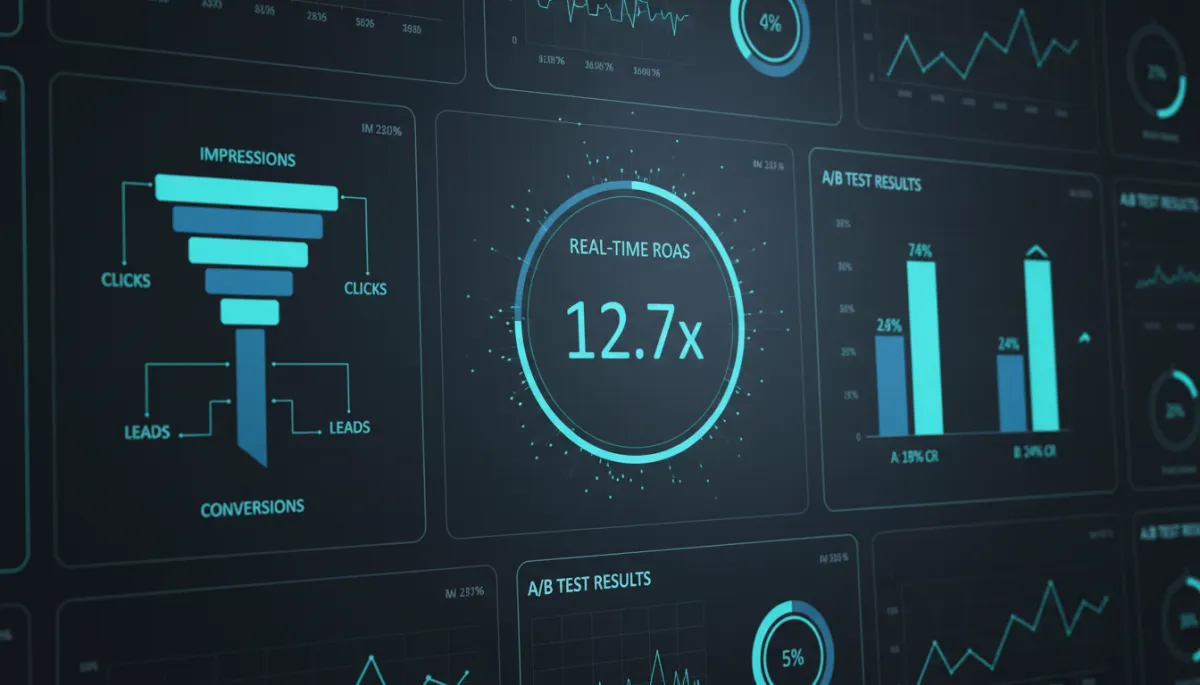
AI ad optimization rapidly reallocates budget toward the highest‑ROI audiences and creatives.
The macro‑trend is clear: AI‑driven automation is one of the primary drivers behind the projected 9.5% growth in U.S. ad spend, as reported by IAB. Why? Because AI removes the guesswork. It can test hundreds of creative variations, audiences, and placements simultaneously, then reallocate budget toward what is actually working in real time. For an AI ad optimization entrepreneur—or any founder running their own ads—this is the difference between burning cash and building a predictable acquisition machine.
On a practical level, here is what this looks like for a small business:
- Use AdCreative.ai or Meta’s AI suite to generate dozens of ad creatives and copy variations in minutes, not weeks.
- Plug those creatives into Facebook, Instagram, or Google campaigns where AI handles bidding, placements, and audience expansion.
- Layer in AI analytics and attribution to identify which messages and offers are actually driving profit—not just clicks.
Combined with AI‑enhanced email, social, and content, it is common to see 2–3× improvements in marketing ROI and 6+ hours per week saved per marketer. Senior marketers report saving up to 8–10 hours weekly, freeing them to focus on strategy instead of manual campaign tweaks. That is the real win: AI does not just cut costs; it buys back your time so you can operate like a CEO, not a full‑time ad manager.
Putting It All Together: Your 2026 AI Marketing Stack and Next Steps
You do not need every tool on the market. You need a focused, high‑leverage stack that fits your stage and goals. For most small business owners, that means:
- One general AI assistant (ChatGPT or Claude for Small Business) for ideation, drafting, and strategy.
- One content/SEO tool (Jasper + Surfer SEO or Semrush) for authority‑building content and AI‑aware visibility.
- One email/CRM platform (HubSpot AI, Mailchimp, or Klaviyo) for lifecycle marketing and automated revenue.
- One social scheduler (Buffer, Hootsuite, or Aibrify) for consistent AI‑assisted posting and analytics.
- One ad creative/optimization combo (AdCreative.ai + Meta’s AI suite) for predictable, scalable acquisition.
The entrepreneurs winning in 2026 are not necessarily the ones with the biggest budgets—they are the ones who move first, learn fast, and systematize what works. That is why seasoned advisors like Bison Vazquez, The Local AI Guy for Florida, emphasize building real skill with a handful of tools instead of chasing every new shiny object. Master a lean AI stack, wire it into your daily operations, and your marketing starts compounding instead of constantly restarting from zero.
If you are ready to go beyond dabbling and actually build an AI‑powered marketing engine, do not reinvent the wheel. Discover the AI Secrets Challenge and start marketing smarter today so you can plug into proven frameworks, workflows, and playbooks instead of burning months trying to figure it out alone.
The window is open now—but it will not stay open forever. The small business owners and entrepreneurs who claim their edge with AI marketing tools 2026 will look, in a few short years, like they were “early” and “lucky,” when in reality they simply acted decisively while everyone else hesitated.
